New Atollo Project Inclusive Digital Education Toolkit now available
Posted on July 6, 2026
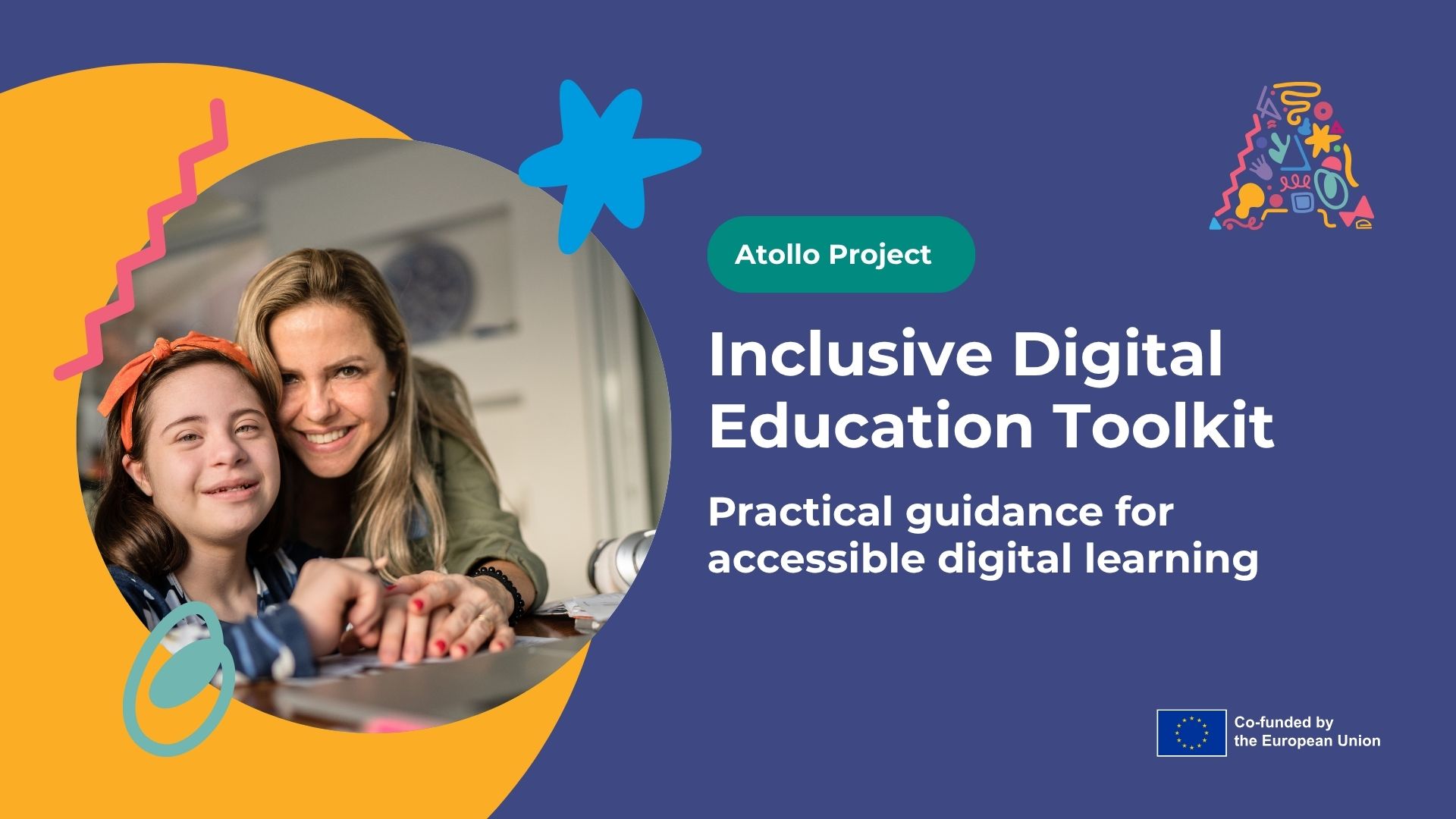
The Atollo Project has published its Inclusive Digital Education Toolkit, a practical resource designed to support more accessible, inclusive and meaningful digital learning for learners with disabilities and special educational needs.
The Atollo Project is pleased to announce the publication of its new Inclusive Digital Education Toolkit, now available to access online.
Developed as part of the Atollo Project, the Toolkit brings together practical guidance, evidence-based recommendations and ready-to-use tools to support inclusive digital education. It has been designed to help educators, school leaders, families, policymakers and digital content developers better understand how digital learning materials can be created, selected and used in ways that support meaningful participation for learners with disabilities and special educational needs.
The Atollo Project has focused on developing accessible and engaging digital educational materials for learners with different support needs. Through the project, partners created, piloted and refined digital educational units in mathematics and ICT, organised across different learning levels and available in multiple languages. The Toolkit builds on this work by translating lessons from development, classroom piloting and evaluation into wider guidance that can be used beyond the Atollo Project materials themselves.
Who is the Toolkit for?
The Toolkit has been developed for a wide range of people involved in inclusive digital education, including:
- Teachers and teaching assistants looking for practical guidance on using digital resources with learners with special educational needs.
- School leaders and ICT coordinators who want to create the right conditions for inclusive digital learning across their school.
- Digital content developers and EdTech providers who are designing accessible and learner-centred educational materials.
- Families and support professionals who want to understand how digital materials can support learning at school and at home.
- Policymakers and education authorities working to strengthen inclusive digital education at system level.
What does the Toolkit cover?
The Toolkit explores the key principles and practical decisions that make digital learning more inclusive. It includes guidance on accessibility, Universal Design for Learning, learner-centred design, readability, visual clarity, multimodal learning, interaction design, classroom implementation and learner support.
It also provides practical checklists and tools that can help educators and schools plan, review and improve the use of digital materials in inclusive settings.
Why does it matter?
A key message of the Toolkit is that technology alone does not create inclusion. Digital materials become inclusive when they are designed with learner diversity in mind, introduced with a clear educational purpose, and supported by teachers, families and systems that understand the needs of learners.
For learners with disabilities and special educational needs, small design and implementation choices can make a significant difference. Clear instructions, accessible interaction, appropriate pacing, visual support, audio options, predictable navigation and adult mediation can all help learners participate more confidently and independently.
The Toolkit shows that inclusive digital education is not only about making resources available. It is about ensuring that learners can understand, engage with and benefit from those resources in meaningful ways.
Supporting inclusive digital education beyond the project
By sharing the Toolkit openly, the Atollo Project aims to support wider progress towards inclusive, accessible and high-quality digital education across Europe and beyond.
The Toolkit can be used alongside the Atollo Project Resource Library and can also support schools, developers and policymakers working with other digital education platforms and materials.
 Get early access to the resources